A thermal bridge is defined as a point in the building envelope where there is a significant leakage of heat (energy) from the building. It is usually addressed in energy-efficient, low-energy and passive buildings.




30.1.2023 Ivan Landa
A thermal bridge is defined as a point in the building envelope where there is a significant leakage of heat (energy) from the building. It is usually addressed in energy-efficient, low-energy and passive buildings.For a clearer understanding, the issue of thermal bridges can be compared to an imaginary dam - the dam in this case is the building envelope (contact insulation and the entire wall) and the water in the dam symbolizes the heat inside the building, which we do not want to let escape, but to manage it as long and efficiently as possible.
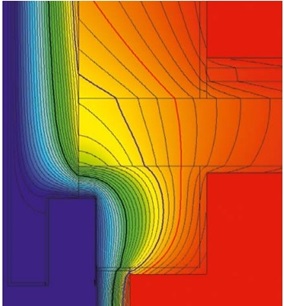
In energy inefficient homes, heat leaks occur in multiple locations at once, which ultimately results in higher heating costs. At the same time, the house needs to breathe, so to speak. This needs to be addressed especially in old houses that have not been adapted for modern operation. If such a house is not systematically enclosed in an airtight envelope, the result could lead to moisture retention and mould growth in the walls of the house, which can have a very negative effect on the health of the occupants.
Modern low-energy or passive houses tend to have airtight envelopes already well insulated and sealed. However, extra care is needed if this envelope is breached, where there can be significant energy leakage and a worsening of the cold penetration effect, leading to the formation of point or area condensation zones. In these, moisture precipitates, which has a negative effect on the building structure and can also lead to mould growth. It is therefore important for any modern building to address quality insulation in as many places as possible and to pay attention to every detail so that heat leakage really has no chance.
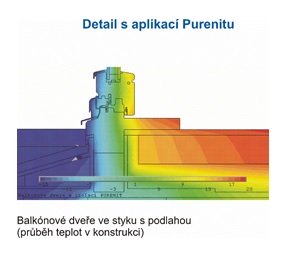
Our PIR insulation, which will hold up to three times the insulating properties of polystyrene, is an effective aid in dealing with the sensitive detailing around windows, and this is when you're dealing with the placement of external blinds in the façade. In a lintel that, because of its load-bearing capacity, must be formed with a steel beam or concrete and window joints, we remove the original insulation and replace it with space for exterior shading. Here, of course, the insulation must be compensated with more effective insulation and the space for the louvres must be made of an insulating but practical and functional material that will work successfully with the façade. Our PurBoxes are the ideal solution in this case, providing an effective insulation component. Using PIR insulation, they also provide a 30mm overlap of the frame connection joint over the window frame, meeting ETICS regulations. You can then use our prefabricated lining to insulate the lining and effectively position the lining sleeves for external blinds.
In the case of thermal bridges our goal is therefore clear - strong and effective insulation without cracks. Please do not hesitate to contact us, we will be happy to help you.