
 cs - Český jazyk

How Do Swifts Nest and How Can You Protect Them During Nesting?
Ivan Landa
The common swift is one of the most remarkable birds in urban environments. It spends most of its life in the air, arriving in the Czech Republic around late April and early May, and departing back to Africa after nesting as early as late July or early August. For this reason, its nesting is often easy to overlook. However, for swifts, the loss of a single nesting site is a major problem, as they return to the same place repeatedly and have difficulty finding a new one. So how do swifts actually nest, and what can you, as a homeowner, do to protect their nesting sites?
Where do they nest and what does nesting look like?
Originally, swifts nested in rock crevices, but today they are largely tied to human structures. They most often use cavities and gaps in taller buildings, under roofs, in towers, and in ventilation openings. The female typically lays two to four white eggs, incubation lasts approximately nineteen to twenty days, and the chicks leave the nest after about forty to fifty-seven days depending on conditions and weather.
Why are they endangered?
The main issue is not that swifts are disappearing from cities without cause. The biggest problem is the rapid loss of suitable nesting sites. Large-scale renovations and building insulation can eliminate many cavities that swifts have long relied on. This species is strongly attached to specific nesting sites, and when they lose one, they struggle to find a replacement. For this reason, any construction work involving façades, roofs, or parapets must be carefully planned.
When should you not interfere?
From a practical standpoint, the most important period is from April 20 to August 10. During this time, nesting swifts must not be disturbed. This means not blocking entry holes, not destroying cavities, and not carrying out work in parapets, roof spaces, or other areas where swifts may nest. If you are planning renovations, it is safer to schedule work in these areas after the nesting season has ended.
How can you tell if they are nesting on your building?
Typical signs include fast flights around the building and loud, piercing calls, especially in the morning and evening. Swift nests are usually hidden deep in cavities and can easily go unnoticed without careful observation. Before insulating or repairing a façade, it is therefore advisable to have the building inspected in advance.
How to protect swifts during insulation and renovation?
The best solution is to preserve existing nesting sites wherever technically possible. If ventilation and entry openings to roof cavities can remain functional after insulation, this is the most bird-friendly option. If that is not possible, alternative nesting opportunities should be integrated directly into the building structure rather than added later as a temporary fix. Special nest boxes or built-in nesting elements designed for insulated buildings are a suitable solution.
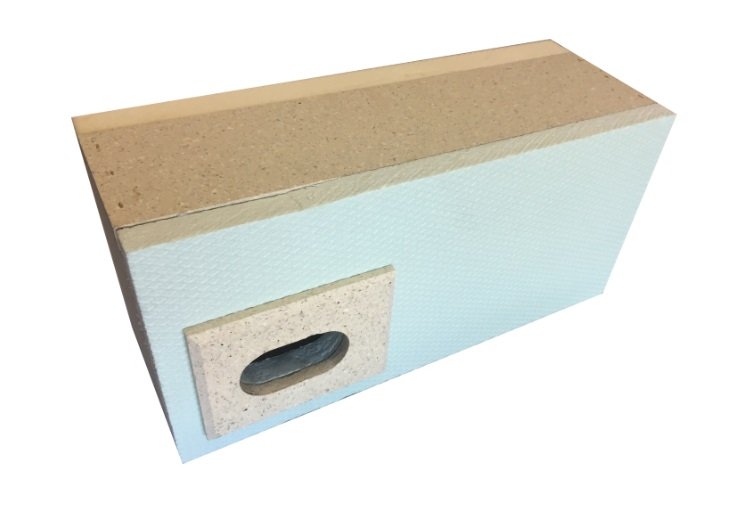
At ISOparts, we have developed a solution that combines swift protection with modern construction practices. We offer flush-mounted nest boxes designed to be integrated directly into insulation systems. These are modular systems made of purenit with PIR insulation and a front XPS layer, meaning the box does not compromise the façade’s function and meets construction requirements for insulation. In other words, this is not an add-on attached to the façade, but a system solution that forms part of the insulation structure.
Where should the nest box be placed?
The box must be positioned high enough for swifts to gain speed during free fall after leaving the cavity. Shaded locations are most suitable, ideally under a cornice, parapet, or roof overhang. Swifts often prefer north, northeast, or northwest orientations, while overheated sides of buildings are unsuitable. Based on our experience, flush-mounted nest boxes make the most sense for buildings taller than six meters, where swifts typically look for nesting sites.
Are swifts legally protected?
Yes, the common swift is a specially protected species in the Czech Republic, classified as endangered. The law protects not only the birds themselves but also their habitats and nesting sites. This means it is prohibited to damage, destroy, or block nests or occupied cavities. Improper intervention is therefore not only an ecological issue but may also constitute a legal violation. Protecting swifts is thus not just a matter of goodwill, but also of responsible construction practice.
Swifts do not need much from humans. It is enough to preserve safe access to their nesting cavities, provide them with peace during the nesting period, and consider alternative nesting options during renovations.
Do you want to preserve nesting opportunities for swifts during your building renovation while meeting all construction requirements? Contact us! We will be happy to help you find the optimal solution for your project.